
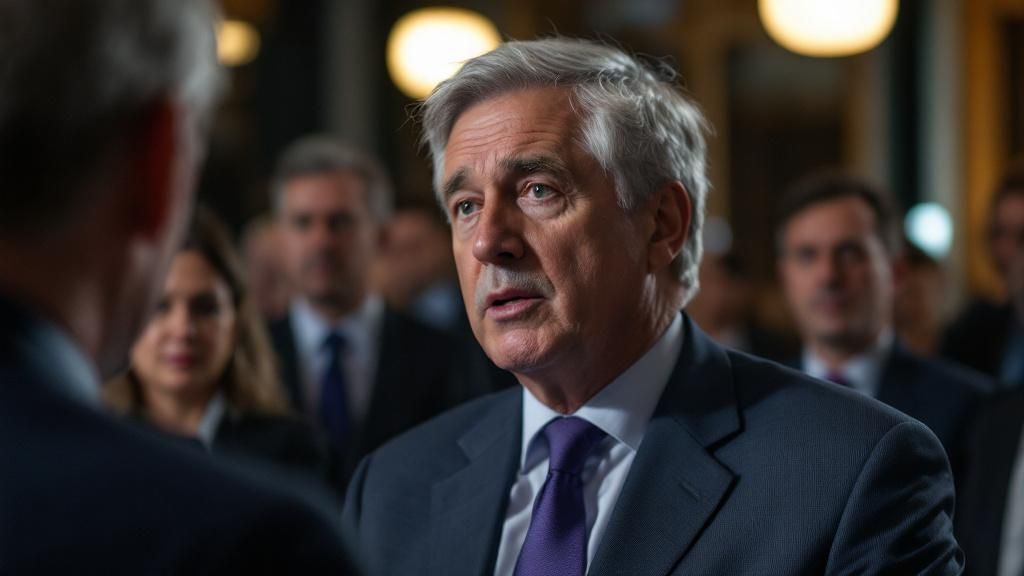
As households throughout the country contend with skyrocketing energy bills and price increases hitting record levels, the opposition figurehead has launched a biting attack on the Government’s response to the cost of living crisis. In a fraught parliamentary confrontation, the opposition has scrutinised the government’s inadequate support measures, demanding more substantial action to help financially stretched families. This article explores the intensifying divisions centred on the crisis and considers the contrasting approaches for financial support.
The Opposition’s Critique of Government Policy
The leader of the opposition has stepped up examination of the government’s handling of the mounting cost-of-living emergency, arguing that present interventions prove inadequate in addressing the level of hardship affecting UK families. In parliamentary debate, the opposition has articulated a detailed critique spanning insufficient financial assistance, inadequate action in energy markets, and a apparent shortage of speed in addressing inflation. The opposition argues that whilst families contend with unprecedented bills, the government’s piecemeal approach simply treats symptoms rather than addressing root causes of economic hardship.
Central to the opposition’s argument is the assertion that the government has seriously underestimated both the extent and timeframe of the crisis. Opposition representatives have underscored figures suggesting that millions of people now face genuine hardship, with many obliged to select between warmth and food. The opposition argues that the government’s initial response underestimated the crisis’s impact, resulting in relief measures that proved inadequate when conditions worsened further. This miscalculation, they argue, demonstrates systemic weaknesses in economic prediction and preparedness.
Limited Assistance Provisions
The opposition has consistently challenged state assistance programmes as insufficient and poorly targeted, maintaining that fuel cost controls do not adequately safeguard those on lower incomes adequately. Critics point out that whilst the government has introduced multiple support measures, encompassing grants and council tax rebates, these measures offer short-term assistance without addressing structural challenges. The opposition argues that means-tested benefits remain excessively narrow, shutting out millions of families in work who still face difficulties with escalating prices. Furthermore, they argue the government’s approach falls short of the ambition needed to address such an extraordinary financial crisis.
Opposition examination proposes that present welfare systems unfairly harm families on moderate incomes who miss out on access requirements for targeted assistance. The party has proposed alternative frameworks involving across-the-board allowances, enhanced benefit programmes, and direct government intervention in energy markets to stabilise prices. They stress that short-term solutions, whilst welcome, cannot substitute for fundamental systemic change. The opposition argues that lacking major policy reform and enhanced government funding, households will remain subject to severe money pressures in the coming period.
Extended Economic Strategic Concerns
Beyond urgent crisis response, the opposition has raised fundamental questions regarding the government’s long-term economic strategy and competitiveness. Opposition analysts argue that the current approach focuses on near-term political appearances over sustainable economic planning, potentially compromising Britain’s future economic wellbeing. They contend that without strategic investment in renewable energy systems, productive capacity, and skills development, the nation risks extended economic stagnation. The opposition underscores that addressing cost of living pressures requires extensive reforms addressing productivity, technological innovation, and sectoral development alongside urgent relief measures.
The opposition has outlined concerns that government policy is fragmented across different areas, with energy policy, industrial strategy, and fiscal measures functioning separately rather than as coordinated elements. Critics argue this piecemeal framework prevents effective addressing of core inflationary challenges and structural economic weaknesses. The opposition advocates for a integrated strategic framework encompassing energy transition, manufacturing revival, and skills development. They maintain that true economic recovery demands transformative policy reform rather than modest changes to existing frameworks.
Government’s Response and Counter-arguments
The government has steadfastly defended its economic policy, arguing that the affordability pressures are chiefly driven by international forces beyond direct Westminster oversight. Ministers have highlighted the extraordinary scale of the energy crisis, resulting from international tensions and worldwide supply chain interruptions. They argue that their targeted support packages, encompassing the price cap on energy and affordability support payments, embody a balanced and economically prudent approach. The Treasury maintains that profligate expenditure could compound inflation even more, compromising long-term financial stability and eventually harming the same families the opposition professes to defend.
Government spokespersons have highlighted the substantial financial assistance currently in place, reaching billions of pounds in immediate aid to low-income families. They contend that their policies reconcile short-term assistance with disciplined budgeting, preventing the debt spiral that unchecked spending could trigger. Ministers also draw attention to their initiatives in boosting energy security through sustainable energy projects and market diversification. The government argues that whilst the opposition provides sympathetic rhetoric, their suggested policies lack economic credibility and would prove unsustainable without triggering higher taxes or greater public borrowing.
Furthermore, state representatives emphasise their resolve to confronting core economic problems through productivity improvements and corporate investment encouragement. They maintain that enduring recuperation requires fundamental economic restructuring rather than immediate financial relief. The administration believes this approach in the end produces enhanced economic wellbeing and protection for every citizen.
